Online sales
What are online sales?
IN SHORT
Online sales means using your website and digital channels to win customers: the buyer either pays directly through checkout, or the site earns enough trust to start a sales conversation, or both. Either way, most of the research and doubt-clearing now happens before anyone from your business speaks to the buyer.
By The Webtec team, SEO, AEO and growth specialistsReviewed October 11, 202610 min read
- There are three models: direct checkout, lead-to-call and hybrid. Pick the one that matches how your buyers actually decide.
- Google’s research describes buying as a loop of exploring and evaluating, not a straight line. Your site has to work in both modes.
- Baymard Institute’s aggregated research found a 70.22% average cart abandonment rate, and distrust of the site was one stated reason.
- The site’s job is to answer questions, show proof and make the next step easy, before a human ever gets involved.
What online sales actually means
Online sales is not only e-commerce. It is every way a website helps a buyer move from “I have a problem” to “I will pay you to solve it”. For a shop, that ends in a checkout. For an accounting firm or a plumber, it ends in a booked call, a quote request or a consultation.
The difference between marketing and online sales is the commitment. Marketing creates awareness and interest. Online sales is the set of pages, forms, offers and follow-up that turn that interest into a purchase decision, and capture the buyer’s details when they are not ready to decide yet.
A useful test: if a visitor read nothing else about you, could your site alone convince them to take the next step? If not, the sale is leaking before a human can help.
The three ways a website sells
Every site sells in one of three ways. Choosing the wrong one is the most expensive early mistake, because everything else, from page layout to follow-up, depends on it.
- Direct checkout: the buyer pays on the site. It fits products and low-risk services with a clear price, such as a shop, a software subscription or a fixed-price package. The site must handle price, shipping, payment and trust without a human.
- Lead-to-call: the buyer submits an inquiry or books a call, and a person closes the sale. It fits high-value, custom or high-risk purchases, such as legal work, accounting engagements, clinical treatments and large home projects. The site’s job is to produce a qualified, informed inquiry.
- Hybrid: the buyer can buy small things directly or start a conversation for bigger ones. A software company might offer self-serve plans plus a sales call for large teams. A dental clinic might allow online booking for a check-up and a consultation request for implants.
How buyers research before they talk to you
Google and consultancy The Behavioural Architects studied purchase behaviour and published the “messy middle” model in July 2020. Between the moment someone decides they want something and the moment they buy, they loop between exploring options and evaluating them, often many times. See messy middle and our guide to the sales funnel for how that changes sales funnel thinking.
The same Google research found that even a weaker brand can win preference when it is easy to evaluate: clear specifications, reviews, authority signals and a visible offer. Buyers are not only comparing price. Google’s data showed worldwide search interest in “best” has outpaced “cheap” since 2004.
For you, this means that by the time a buyer fills in a form or phones, they have usually read your site, read reviews and compared you with at least one competitor. A site that only says “contact us” gives them nothing to evaluate, so they go and evaluate someone else.
Trust and risk: what stops a purchase
Every online purchase carries a perceived risk: of losing money, wasting time or choosing the wrong provider. Your site sells by reducing that risk faster than a competitor does.
Baymard Institute’s cart abandonment research, an aggregate of 50 studies last updated in September 2025, reports a 70.22% average abandonment rate. Among shoppers who left for a reason other than browsing, 40% cited extra costs, 19% did not trust the site with their card details, 18% were forced to create an account and 12% could not see the total cost upfront. Those are trust and clarity problems, not traffic problems.
Google’s guidance on helpful content says trust is the most important part of its E-E-A-T framework (see E-E-A-T). It also advises making clear who created content and why. For a service business that translates directly: named people, real credentials, visible address and plain pricing guidance.
Proof must be genuine. The US Federal Trade Commission’s endorsement guides state that reviews must reflect honest experience, and that businesses should not hide negative reviews or pay for positive ones. Fake proof is both a legal and a trust risk.
What the site must do before a human speaks to a buyer
Think of your site as the first sales conversation. It has to do five things, in this order of importance.
- Say who you serve and what you do in one sentence above the fold. If a visitor cannot repeat it, they will not trust it.
- Answer the questions a salesperson would answer: what it costs (or how it is priced), how long it takes, what the process is, and who does the work.
- Show proof that matches the buyer’s risk: named reviews, credentials, case descriptions, guarantees you can honestly keep.
- Offer a next step that matches readiness: a purchase for the ready, a call for the nearly ready, a guide or checklist for the early researcher. See lead magnet and the lead generation guide.
- Keep the step short. Baymard’s 2024 checkout research found the average checkout has 11.3 form fields and that most sites need only 8. Every extra field costs completions.
How to measure whether it is working
Count each stage, not only the end result, and watch the drop-off rate between them. Visitors, product or service page views, form starts, form submissions, calls booked, calls held and sales closed. Each ratio between neighbouring stages tells you where buyers drop out. Google Analytics 4 funnel exploration reports the steps users take to complete a task and shows where they succeed or drop off.
Track the speed of your reply too. A 2011 Harvard Business Review article by James Oldroyd, Kristina McElheran and David Elkington, “The Short Life of Online Sales Leads”, reported that most companies are not responding to online leads nearly fast enough. Read more in the lead generation guide on speed to lead.
Finally, measure revenue per visitor or per lead, not only conversion rate. A site that converts 3% of visitors into bad-fit enquiries is worse than one that converts 1.5% into good ones. Qualification is covered in how to qualify leads.
When online sales goes wrong
The usual failures are not technical. A shop hides shipping costs until the last step. A law firm’s contact page offers only a form and a promise to “be in touch”. A software company gates every answer behind a demo request. In each case the buyer did research, hit a wall and left.
The second failure is a mismatch between model and purchase. Forcing a complicated, high-value service into a checkout, or forcing a ten-euro product through a sales call, adds friction exactly where the buyer least wants it.
The third is treating the site as a brochure. A brochure informs. A sales site asks for a decision, reduces risk and makes the answer easy to give. Our conversion rate optimization work starts by finding which of these walls your buyers hit.
What is changing
Buyers increasingly start with AI assistants and search summaries rather than a list of links, which means they arrive better informed and sometimes already shortlisted. Being named in those answers is a discovery problem, covered in what is AEO.
The practical consequence for sales is that the first visit is often a late visit. Your pages must hold up to a buyer who already knows the basics and is looking for reasons to choose or reject you.
Examples by industry
- E-COMMERCE BRANDS
Example: a small online shop selling handmade leather bags. The shop gets steady visits but most baskets are abandoned. Shipping cost only appears on the last page and an account is required to pay.
- Show the delivery cost and delivery time on the product page, so the total is never a surprise.
- Offer guest checkout and ask only for fields needed to ship and pay.
- Add return terms and real customer reviews next to the add-to-basket button.
- Track product view, basket, checkout start and payment separately to see which step still leaks.
Takeaway: In a direct-checkout model, trust and clarity at each step decide the sale, so fix the cost surprises and friction first.
- LAW FIRMS
Example: a three-lawyer family law firm. The website has one contact form and a phone number. Prospective clients compare several firms before calling, and the firm gets many enquiries that are not a fit.
- Write a page for each matter type that explains the process, typical stages and how fees are structured, without promising outcomes.
- Show lawyer profiles with real credentials and the matters they handle.
- Add two or three questions to the form so the firm can see matter type and urgency.
- Set a rule for replying to every enquiry the same day and measure it.
Takeaway: In a lead-to-call model the website must pre-answer the buyer’s doubts and capture just enough detail for a useful first call.
- TRADES, CONTRACTORS AND HOME SERVICES
Example: a heating and plumbing company covering one city. Most customers arrive from search on a phone, often with an urgent problem. The current site is slow to load and hides the phone number in the footer.
- Put a tap-to-call button and the service area at the top of every page.
- Add a short quote request form for non-urgent jobs, with photo upload.
- Show real reviews and job photos for each main service.
- Check the speed of the call-back by logging when each enquiry arrives and when someone responds.
Takeaway: A hybrid of call-now for urgent jobs and a form for planned work matches how different buyers need to act.
HOW WEBTEC DOES IT
How Webtec approaches online sales: how we do it
We start from the purchase, not the page. Before design or copy, we decide how your buyers actually decide, then build the shortest honest path from first visit to purchase or conversation.
- Choose the sales model (checkout, lead-to-call or hybrid) from how your buyers buy.
- Map the questions a buyer needs answered and put the answers on the page, not behind a call.
- Set up measurement for each stage so drop-offs are visible, then fix the biggest one first.
- Every client gets a project manager, so decisions and fixes do not wait in a queue.
Common mistakes
- Picking checkout for a purchase that needs a conversation, or the reverse. Buyers either feel rushed or face needless friction, and abandon.
- Hiding the price range, timeline or process. Buyers who cannot evaluate you cannot choose you, so they choose someone they can evaluate.
- Showing proof you cannot back up. Invented or selectively shown reviews break trust and can breach advertising rules.
- Forcing account creation before purchase. Baymard’s research lists forced accounts among the stated reasons shoppers abandon.
- Counting only final conversions. Without stage-by-stage numbers you cannot tell whether traffic, trust or the form is the problem.
- Leaving enquiries unanswered for hours. HBR research found most firms respond too slowly, and slow replies waste the work done to earn the enquiry.
Checklist
- We have written down whether we sell by direct checkout, lead-to-call or hybrid, and why.
- The homepage states who we serve and what we do in one sentence a visitor can repeat.
- The site gives a price, a price range or a clear explanation of how pricing works.
- There is real, attributable proof on the pages where a decision is made.
- Every form asks only for what we need to reply usefully.
- Each stage (visit, form start, enquiry, call held, sale) is counted separately.
- Someone owns replying to enquiries and has a target response time.
- We have tested the whole path on a phone.
Questions
What is the difference between online sales and e-commerce?
E-commerce is one type of online sales: the buyer pays on the site. Online sales is wider. It includes any way a website moves a buyer toward a purchase, including enquiry forms, booked calls and quote requests that a person later closes. A law firm, an accountant and a roofing company usually sell online without any checkout. The website earns trust and captures the enquiry, and a person finishes the sale. The skills overlap, because both depend on clear offers, proof and low friction, but the measurement differs: shops track orders and revenue per visitor, while service firms track qualified enquiries and closed deals.
Should a service business sell directly online?
Only if the service has a clear scope and price and little risk for the buyer. Fixed-price packages, such as a tax return, a standard will or a boiler service, can work as direct bookings with online payment. Custom or high-value work usually needs a conversation first. A hybrid is often best: let buyers book or buy the simple option online and offer a call for complex cases. Test with real buyers rather than guessing. If people keep emailing to ask what the price is, your site is not answering the question, and a visible price or range will help.
How long does it take to see results from improving online sales?
It depends on traffic, starting point and what is broken. Fixing an obvious blocker, such as an unclear call to action or a broken form, can show up in your numbers within weeks. Building trust assets such as reviews, case descriptions and clear pricing guidance takes longer. No one can promise a specific result. What you can do is measure each stage before you change anything, change one thing at a time, and compare on the same measures. Webtec recommends reviewing results monthly so decisions are based on a full picture rather than a few days of data.
Do buyers really research before contacting a business?
Yes. Google’s published messy middle research describes buyers looping between exploring and evaluating options before they buy, and says brands are won and lost in that stretch. Search, reviews, social media and comparison sites all feed it. For a small business, the practical point is simple: assume the person filling in your form has already looked at you and at least one competitor. Your pages should answer the questions they would otherwise ask on the phone, because the buyers who cannot find those answers usually do not ring at all.
What does an online sales system cost?
Costs depend on the model, the platform and how much of the system already exists. A lead-to-call site needs strong pages, a form and a way to track and follow up leads. A shop also needs product setup, payments, shipping rules and checkout testing. Webtec does not publish prices in guides because scope varies, but the sensible approach is to start with the stage that leaks the most, fix it, and measure before adding more. Ask any provider what they will measure and how often they will report, not only what they will build.
Does this work for local businesses such as plumbers or clinics?
Yes, and often more directly. Local buyers research reviews, check availability and want to know the price range and area you cover. A tradesperson’s site that shows service areas, genuine reviews, a clear callout process and a fast call-back option does the first sales conversation for them. A clinic’s site can show treatments, practitioners and online booking. The principles are the same as for any business: reduce risk, answer questions, make the next step short and reply fast.
Sources
- The Messy Middle of Purchase Behavior: Think with Google (Google)
- Cart Abandonment Rate Statistics: Baymard Institute
- Checkout Flow: Average Form Fields: Baymard Institute
- Creating helpful, reliable, people-first content: Google Search Central
- FTC’s Endorsement Guides: What People Are Asking: US Federal Trade Commission
- The Short Life of Online Sales Leads: Harvard Business Review
The Webtec team
SEO, AEO and growth specialists. Researched and reviewed by the Webtec team.
Related guides
Pick up where this one leaves off.
- 01The sales funnelA sales funnel maps how buyers move from first visit to purchase. Learn AIDA, top, middle and bottom stages, why real journeys are messy, and how to do the maths.
- 02Lead generationLead generation is how you attract people and capture their details so you can sell to them. Channels, lead magnets, form design, reply speed and consent basics.
- 03Lead qualificationLead qualification decides which enquiries deserve your time. Learn MQL vs SQL, BANT, lead scoring, the questions to ask on forms and when to say no politely.
Want this done for your business?
Explore our services
Start with the one closest to what you just read.
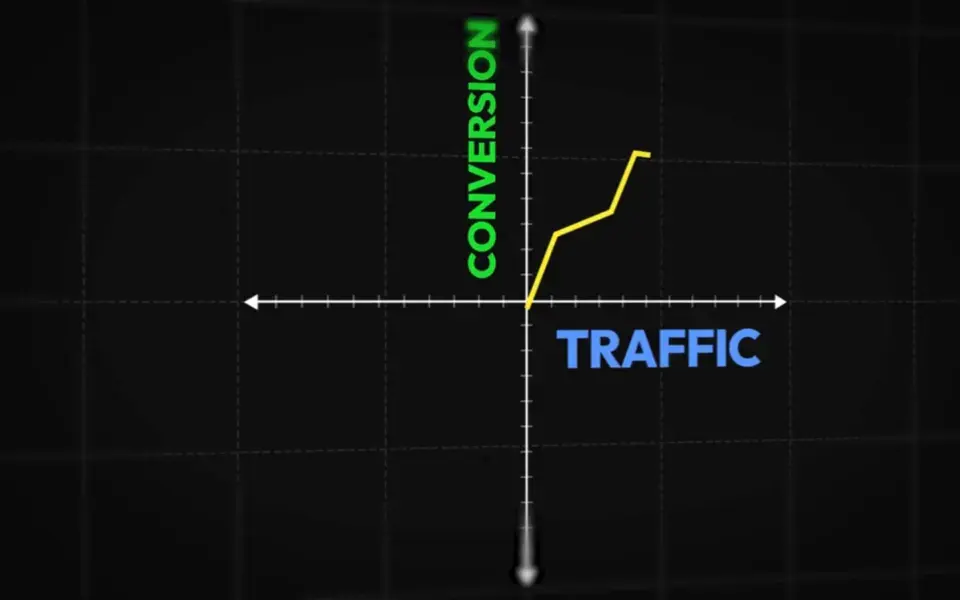 Funnels and conversionTurn the visits you already have into sales and leads.Explore
 Paid adsGoogle and Meta, judged by the result you count.Explore
 SEORank for the searches that bring paying clients.Explore
 AI answer visibilityBe the business ChatGPT, Gemini and Perplexity name.Explore
 Website redesignRebuilt around your win, not around a homepage.Explore
 Web developmentCustom web apps, tools and dashboards built around how you work.Explore
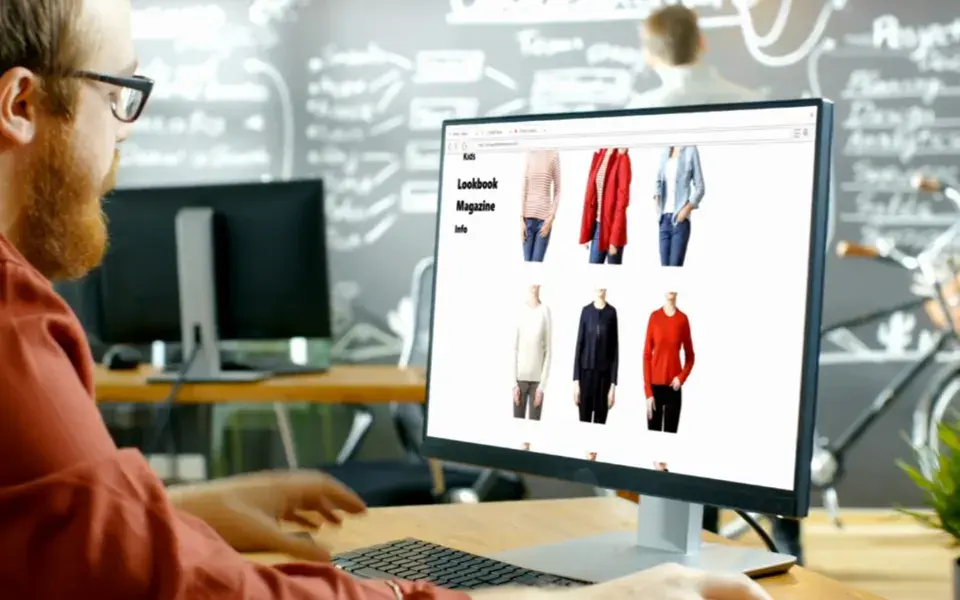 E-commerceOnline stores built to sell.Explore
 BrandingA look that earns trust.Explore
 CopywritingWords that answer the buyer first.Explore
 Growth managementOne accountable team, run monthly, against the one result you count.Explore











































































