
When someone asks ChatGPT a question and it returns an answer with a few linked sources, those citations do two jobs at once: they tell the reader which pages the model trusted, and they hand a little referral attention to the sites named. So business owners keep asking a fair question: how does ChatGPT decide which websites to cite, and can you influence the outcome?
The short answer is that ChatGPT cites sources mainly when it runs in browsing or search mode. In that mode it retrieves live pages, then surfaces a handful as inline citations based on whether a page is retrievable, topically relevant, authoritative, well structured, and reasonably current. In its default mode, which answers from training data alone, it often shows no sources at all, and any references it invents can be unreliable. This guide walks through both mechanisms, the signals that tip a citation one way or another, and the steps that make a website more likely to be quoted. It also untangles a naming problem: “citing ChatGPT” and “ChatGPT citing sources” are two different things, and the People Also Ask results mix them together.
What “citation” actually means inside ChatGPT
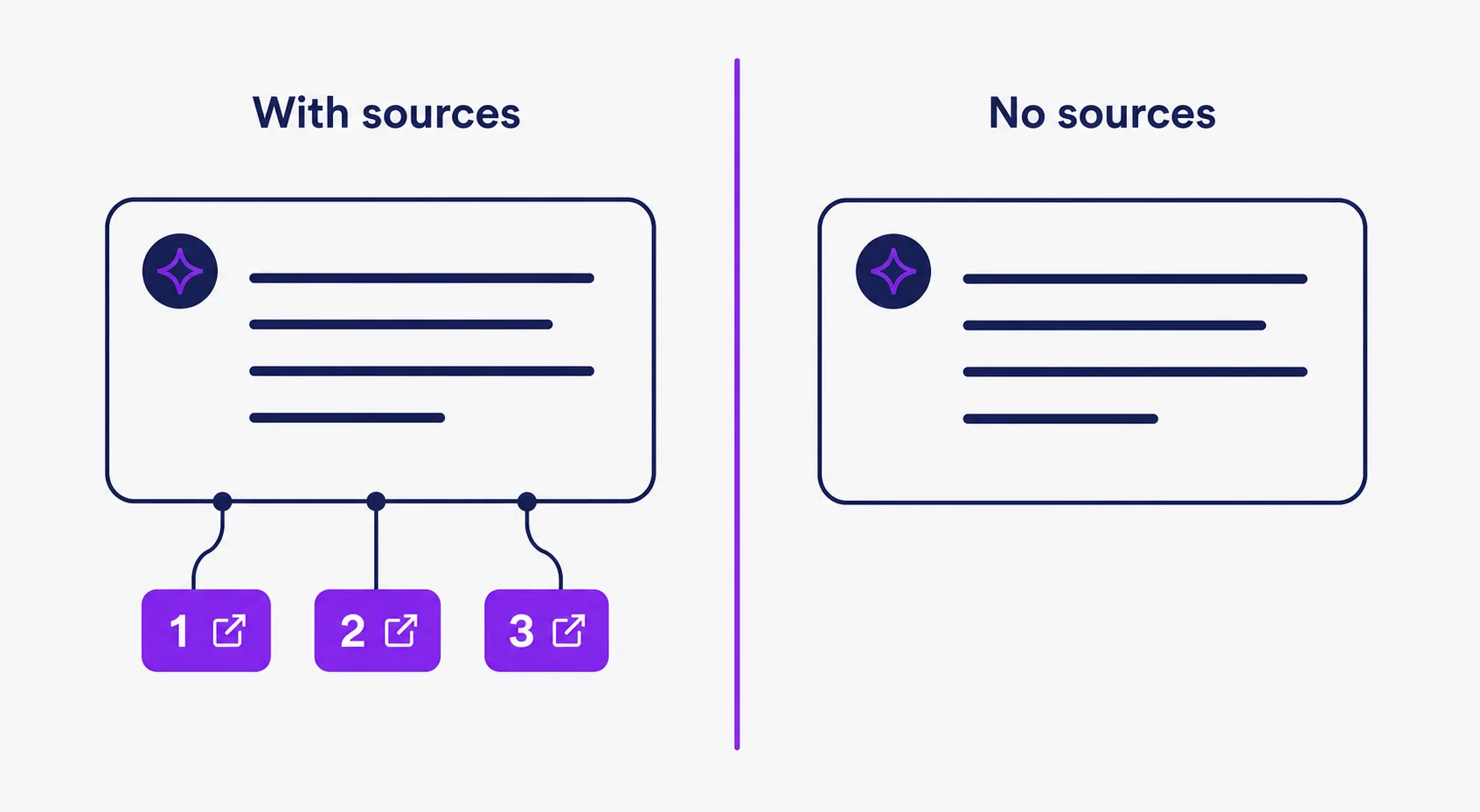
Inside ChatGPT, a citation is a linked reference the model attaches to part of an answer when it has retrieved that information from a live web page. You see a source name or a numbered link, you can click through, and the destination is a real URL. That differs from ordinary generated text, which the model composes from patterns in its training data with no link behind it.
The phrasing trips people up. “ChatGPT with citations” usually means an answer that shows its sources. “Citing ChatGPT” means treating the tool itself as something you reference in your own writing, the way a student references a book. These are separate ideas, and we cover the second one later.
Does ChatGPT know how to cite sources? In a limited sense, yes: when it browses, it can display the pages it pulled from. But there is a catch. When the model is not retrieving live pages and you ask it for references anyway, it can produce citations that look plausible yet turn out to be invented, complete with fake authors, titles, and journal names. Duke University Libraries documented this fabrication problem, and it is the single biggest reason to verify any reference a chatbot hands you rather than trusting it on sight.
When ChatGPT shows citations vs. when it doesn’t
Citations appear when the tool actually searches the web to answer your prompt. Time-sensitive questions, requests for current data, and prompts where the model judges that fresh information matters tend to trigger retrieval. Broad, general-knowledge questions it can answer from memory often do not.
That is why the same prompt can produce sources one time and none the next. Whether a search is triggered depends on how the question is phrased, the mode you are in, and the model’s own judgment about whether it needs outside information. If no retrieval happens, there is no pool of pages to cite from, so no links appear.
How ChatGPT decides which websites to cite: the two source mechanisms
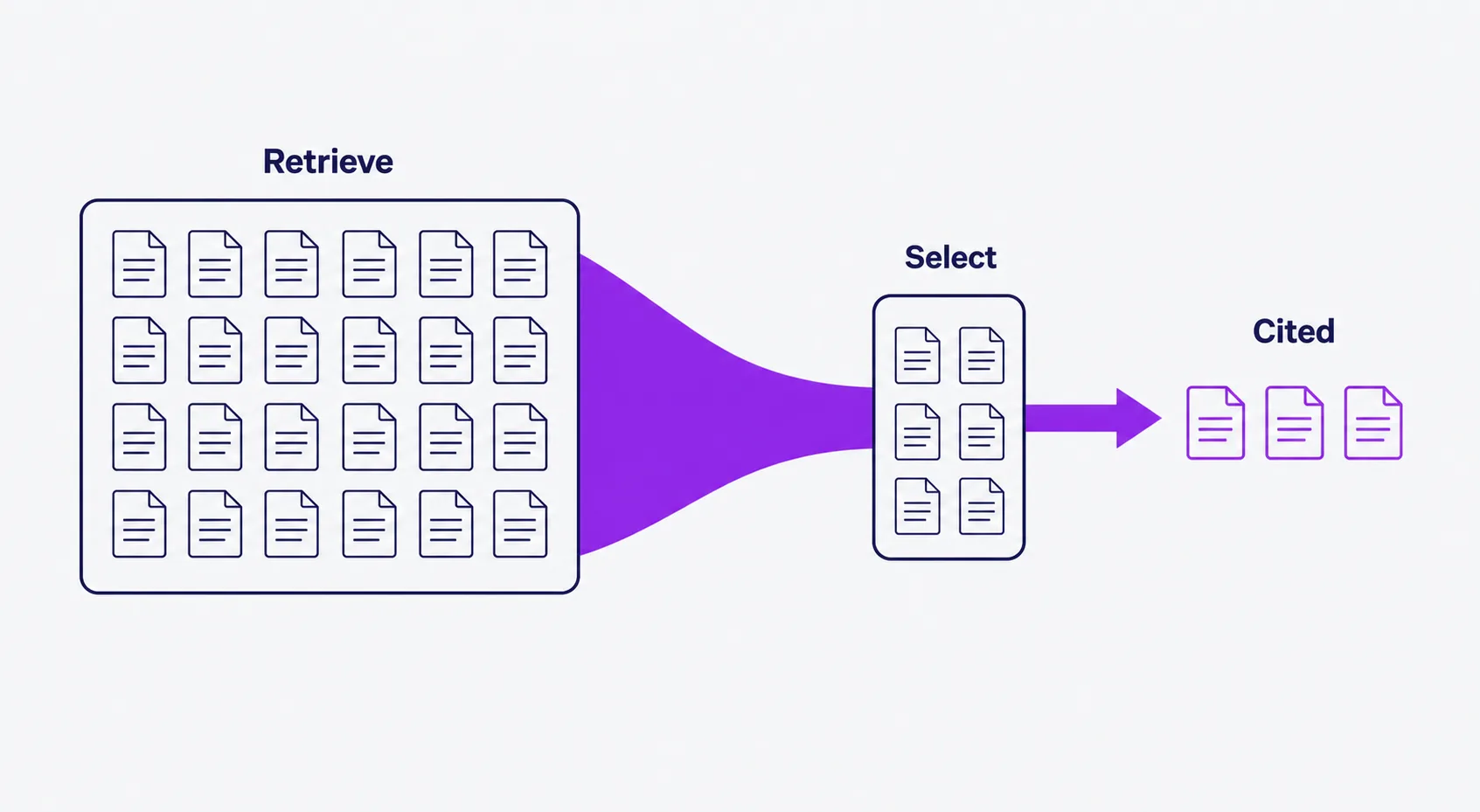
To understand how ChatGPT decides which websites to cite, separate the two ways the model can reach an answer. They behave very differently, and only one produces real citations.
Parametric memory (no retrieval, higher fabrication risk)
By default, ChatGPT answers from its parametric memory: the knowledge baked into its model weights during training. No live page is fetched. This is fast and often useful, but it has two limits. The knowledge is frozen at a training cutoff, so it can be out of date. And because no source is being read, any “reference” the model offers is reconstructed from patterns rather than pulled from a document, which is where invented citations come from. When you see an answer with no links, you are almost always looking at a parametric response.
Browsing / search mode (real, retrievable citations)
When ChatGPT browses, it sends a query to a search layer, retrieves a set of live pages, reads them, and composes an answer grounded in what it found. The retrieved pages become the candidate pool, and a subset become the inline citations you see. This mode produces trustworthy, clickable sources.
So how does ChatGPT choose its sources when browsing? It does not read the entire web for each question. It works from the pages a search returns for the query, then narrows to the ones that best match the question and best support the specific claims in its answer. That two-step funnel, retrieve then select, is the heart of the process. If your page never enters the retrieved set, it cannot be selected, no matter how good it is.
If your page never enters the retrieved set, it cannot be selected, no matter how good it is.
The signals that decide which page gets cited
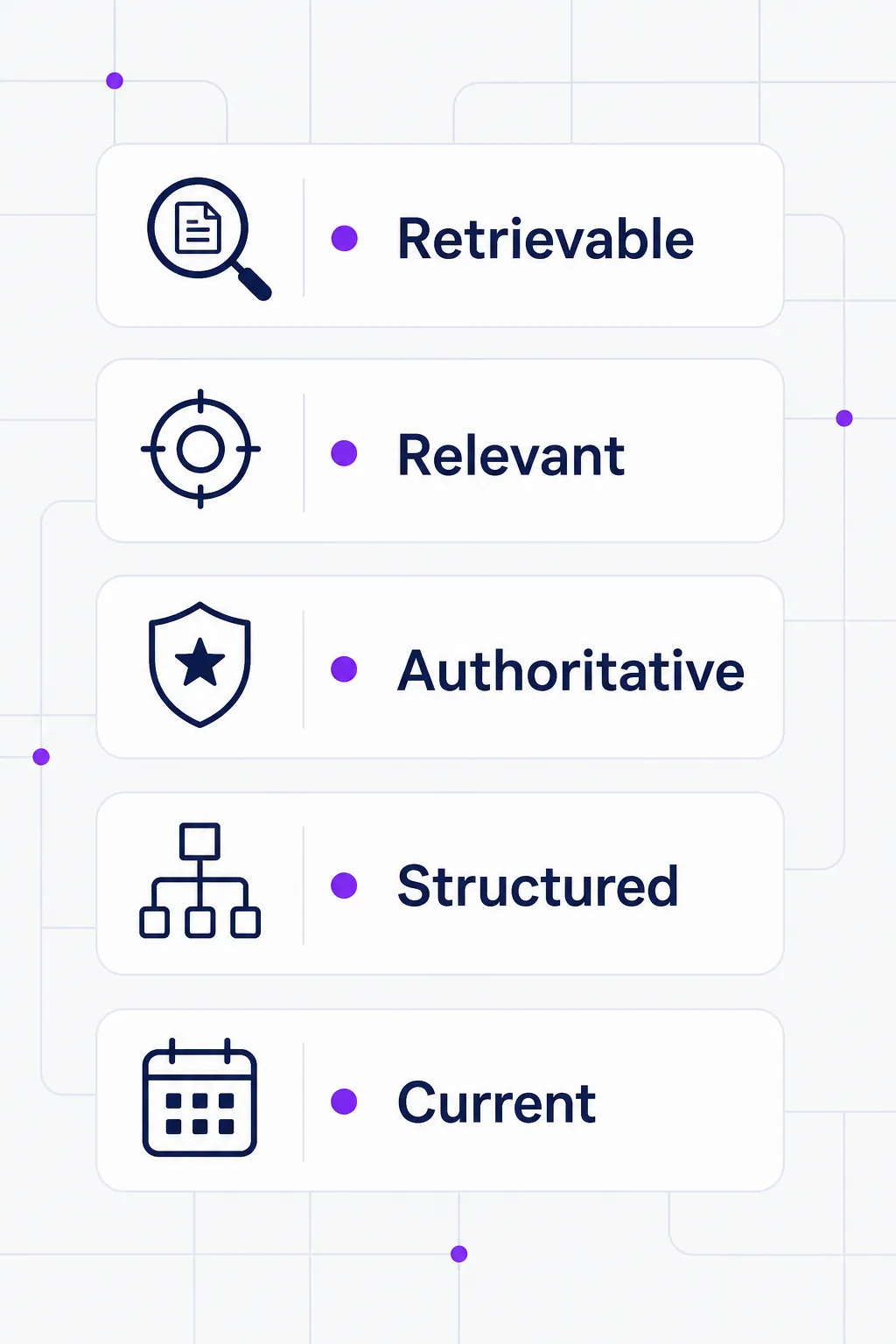
Once a pool of pages is retrieved, what makes ChatGPT cite one website over another? There is no published, official formula, and anyone claiming exact percentages or insider knowledge of the ranking deserves skepticism. But the observable pattern lines up with a handful of sensible signals. Here are the ones that matter most, each with a practical lever attached.
Retrievability and indexation
This is table stakes. If a search layer cannot find and read your page, the page cannot be cited. Pages blocked by robots rules, buried behind logins, rendered only by heavy client-side scripts, or simply not indexed never enter the candidate pool. Retrievability is a technical property, and it is the first thing to get right.
Topical relevance and query match
Among retrieved pages, the model favors those that clearly answer the specific question. Semantic match matters more than keyword stuffing: a page that directly addresses the query, with unambiguous subject matter and clear entities (who, what, which product, which place), reads as a better fit than a page that mentions the topic in passing.
Authority and third-party validation
Established, widely referenced sources come up disproportionately in AI answers. Encyclopedic references, large community platforms, and recognized publishers appear often because they carry accumulated trust and are cited across the wider web. Being referenced by other reputable sites, holding a consistent and recognizable brand entity, and demonstrating genuine subject expertise all raise the odds. This is the same trust logic academic institutions apply to sourcing; the APA, for instance, publishes formal guidance on how to reference ChatGPT and AI tools, which shows how much weight established institutions place on verifiable, attributable sources.
Content structure and on-page position
Models prefer content they can extract cleanly. Clear headings, direct answers stated up front, short self-contained passages, and well-formed lists and tables all make a page easier to quote. Position matters too: information placed early, near the top, tends to surface more often than the same information buried deep in a long article. Answer the question plainly, and answer it early.
Freshness and recency
For questions where time matters (prices, statistics, current events, product versions), recently updated pages are favored over stale ones. Keeping key pages current, with visible update dates and refreshed facts, helps them qualify for time-sensitive queries.
| Signal | Why ChatGPT weights it | Practical action |
|---|---|---|
| Retrievability | A page must be found and readable to enter the candidate pool | Allow crawling, avoid login walls, ensure content renders without heavy scripting |
| Topical relevance | The model matches answers to the specific question | Address one clear question per page with unambiguous entities |
| Authority | Established, referenced sources read as trustworthy | Earn mentions elsewhere, keep a consistent brand entity, show real expertise |
| Structure and position | Clean, early answers are easier to extract | Use clear headings, answer up front, add lists and tables |
| Freshness | Recent content fits time-sensitive queries | Update key pages, show dates, refresh facts and figures |
Why AI citations matter for business visibility
Getting cited is not a vanity metric. When a website is named inside an AI answer, it is presented to the reader as a trustworthy source on that topic, and it becomes a small referral surface at the exact moment the person is looking for an answer. Discovery is shifting from ten blue links a searcher scans to a few named sources a model chose on the searcher’s behalf. If your brand is one of those named sources, you gain visibility and credibility in a place traditional rankings do not reach.
For a small or mid-sized business, that matters because AI answers are becoming a genuine channel alongside conventional search, not a replacement for it. The work that earns citations is not exotic; it overlaps heavily with sound search engine optimization and content strategy. Retrievable pages, clear answers, credible authority, and current facts help you rank in search and qualify for AI citations at the same time. The two disciplines complement each other rather than compete.
| Dimension | Traditional SEO | AI-citation optimization |
|---|---|---|
| Ranking unit | A page position in a results list | A named source inside a generated answer |
| Primary signals | Relevance, links, technical health, intent match | Retrievability, extractability, authority, freshness |
| How you measure | Rankings, impressions, clicks | Appearance in answers, brand mentions, AI referral traffic |
| Content priority | Comprehensive pages targeting queries | Clear, early answers to specific questions |
The two overlap far more than they diverge, so investment in one strengthens the other.
How to make your website citation-ready
Most articles on this topic stop at the mechanics. The useful part is what you actually do. Citation-readiness breaks into three foundations, and you can work them in order.
Technical foundation: be retrievable
Start with access. Confirm that important pages are crawlable, that your robots rules are not blocking content you want seen, and that pages render their main content without depending entirely on client-side scripts. Fast, accessible, well-structured pages are easier for any retrieval system to read. This is squarely web development and site performance work, and every later step depends on it. There is no point optimizing content a crawler cannot reach.
Content foundation: be quotable
Write so a machine, and a busy human, can lift a clean answer. State the direct answer near the top of the page. Break topics into clearly headed sections. Use short, self-contained passages, lists, and tables for facts and comparisons. Name your entities plainly instead of leaning on pronouns and vague references. Support claims with evidence, and keep facts current. Content that is easy to quote is content that gets quoted.
Authority foundation: be credible
Authority is earned, not declared. Genuine expertise on the page, a consistent brand identity across the web, and mentions from other reputable sources all build the trust signals AI systems appear to reward. This is the practical side of the experience, expertise, authoritativeness, and trust framework: show who is behind the content and why they are qualified, and give other credible sites reasons to reference you.
| Phase | Core actions | Typical effort | Who leads |
|---|---|---|---|
| Technical | Crawlability, clean rendering, speed, indexation | Weeks, then ongoing | Developers |
| Content | Direct answers, structure, clear entities, current facts | Ongoing per page | Content and SEO team |
| Authority | Earned mentions, consistent brand, demonstrated expertise | Months, cumulative | Marketing, plus client input |
The authority phase is the slowest and depends most on client participation: earned mentions and genuine expertise cannot be manufactured overnight, and they compound over time.
How to cite ChatGPT in your own work
Now the flip side, because “how do you reference AI” is a different question from “how does ChatGPT pick sources.” If you used ChatGPT to draft or research something and need to cite it, treat the tool as what it is: a drafting and discovery aid, not a citation authority.
Is ChatGPT a good citation generator? Not on its own. It can suggest where to look and format references, but because it can fabricate sources when it is not retrieving live pages, every reference it produces has to be verified against the actual source before you rely on it. Use it to find candidate sources, then confirm each one exists and says what the model claimed.
How do you cite ChatGPT itself when you have quoted or leaned on its output? Recognized style guides now cover this. The APA’s guidance on citing ChatGPT treats the tool as the author of the text you used and asks you to record the model, the version or date, and the prompt context, since another person cannot retrieve your exact conversation. And when the model hands you a list of sources, remember Duke’s warning about fabricated references: use ChatGPT with citations as a starting point, then check each source yourself.
Measuring whether your AI-citation strategy works
AI-citation optimization is an emerging discipline, and the signals are noisier than classic rankings. Nobody can promise placement, and any claim of guaranteed citation is a red flag. Still, you can track meaningful indicators.
Watch for your brand or pages appearing as named sources in AI answers to questions you care about. Monitor branded and entity mentions across the web, since third-party validation feeds authority. Look for referral traffic arriving from AI surfaces in your analytics. And keep a running list of the questions you want to be cited on, then check coverage over time. None of these is a single clean number, so read them together as a trend rather than a scoreboard, and set expectations accordingly: this is early, evolving territory, and progress shows up gradually.
Frequently asked questions
Does ChatGPT choose its sources the same way every time?
How does ChatGPT choose its sources when browsing vs. in default mode?
Can I pay to be cited by ChatGPT?
Is ChatGPT a good citation generator?
How do you reference AI content you used?
Next steps
Citation odds rise when a website is retrievable, relevant, authoritative, clearly structured, and current. Those are not five separate projects; they are the same foundations that make a site perform in search, applied with AI answers in mind. Get the technical base right so pages can be read, write clear answers that are easy to quote, and build genuine authority over time.