Article Summary
- Primary Google Business Profile category is the single most influential factor in local pack visibility, ahead of reviews, links, and everything else measured
- A dedicated page for each service carries more weight for local organic rankings than any other factor, which is why generic “Electrical Services” pages underperform
- Emergency and planned electrical searches need separate pages, because one customer decides in minutes and the other compares for days
- Google and the FTC both restrict incentivized reviews, and review gating creates policy risk on top of a distorted profile
- Core Web Vitals targets for a service site are LCP under 2.5 seconds, CLS under 0.1, and INP under 200 milliseconds
This guide covers everything you need to know on local SEO for electricians: Google Business Profile setup, service and location pages, trust signals specific to a licensed trade, technical performance, AI search visibility, and how to measure whether any of it produced work.
What Local SEO for Electricians Actually Means
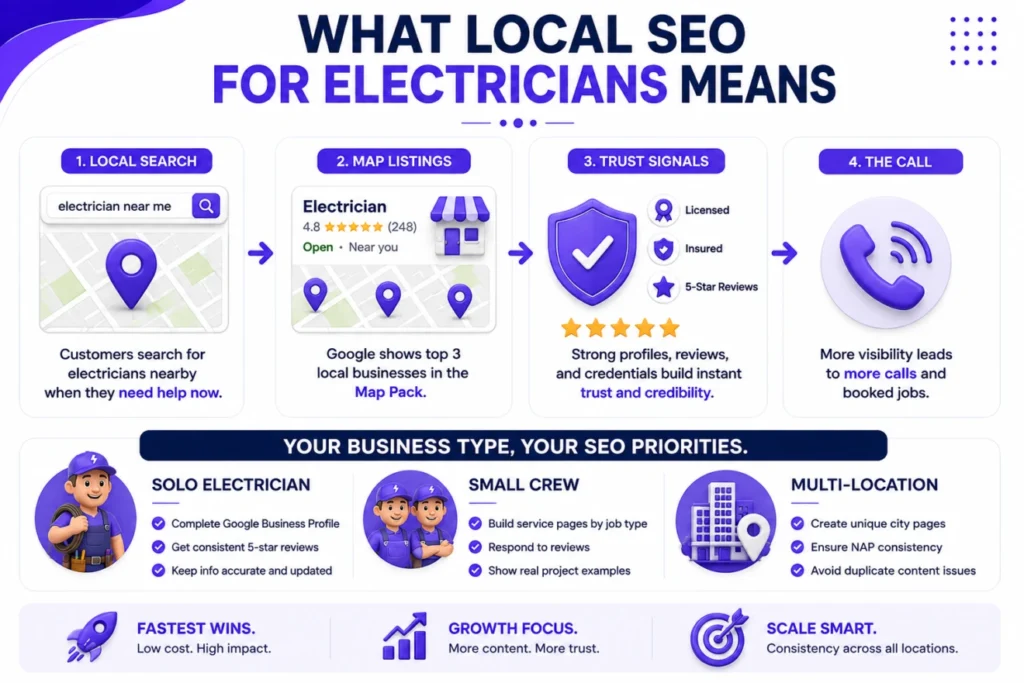
Local SEO for electricians is the practice of optimizing a business’s website, Google Business Profile, and online reputation so it shows up in local search results, map listings, and AI-generated answers when nearby customers search for electrical services.
It combines technical setup, location-specific content, and consistent trust signals to put a business in front of people who need an electrician right now.
For electrical contractors, this discipline decides who gets the call and who gets skipped.
General SEO chases broad visibility. Local SEO chases nearby customers who are ready to hire someone today.
That difference changes almost everything about where an electrician should focus first, and it changes depending on the size of the business doing the work.
Many of these same fundamentals carry over almost directly into local SEO for plumbers, another urgency-driven trade where the exact same map-pack logic applies.
Is Local SEO for Electricians Different From General SEO?
Yes, and the difference comes down to intent. Someone whose breaker keeps tripping isn’t reading a ten-part buying guide. They want a licensed, nearby electrician who can show up today.
Local search reflects that urgency directly: Google shows a map pack of three local businesses above the regular organic results for searches like “electrician near me” or “emergency electrician [city].”
A business selling nationally competes on content and authority.
An electrician competes on proximity, trust, and how complete their local listings look at the exact moment someone searches.
One Truck, Small Crew, or Multi-Location: Why This Changes Your Priorities
A solo electrician running one van needs different priorities than a company running a five-person crew, and both look different from a business operating across several cities.
The solo operator gets the fastest return from the cheapest levers: a complete Google Business Profile and a steady flow of reviews.
A small crew with reviews already coming in can shift attention toward dedicated service pages built around specific jobs.
A multi-location business faces a risk the other two rarely see: near-identical city pages that quietly cost rankings instead of building them.
| Business Type | Priority Focus |
| Solo operator | Google Business Profile, review generation |
| Small crew | Service pages by job type, review response |
| Multi-location | Unique city pages, NAP consistency across locations |
Google Business Profile: Your Highest-Impact Local SEO Priority
Google Business Profile carries more weight than almost anything else on this list.
Whitespark’s 2026 Local Search Ranking Factors report, places Primary GBP Category as the single most influential factor in local pack visibility.
The Profile Setup Most Electricians Get Wrong
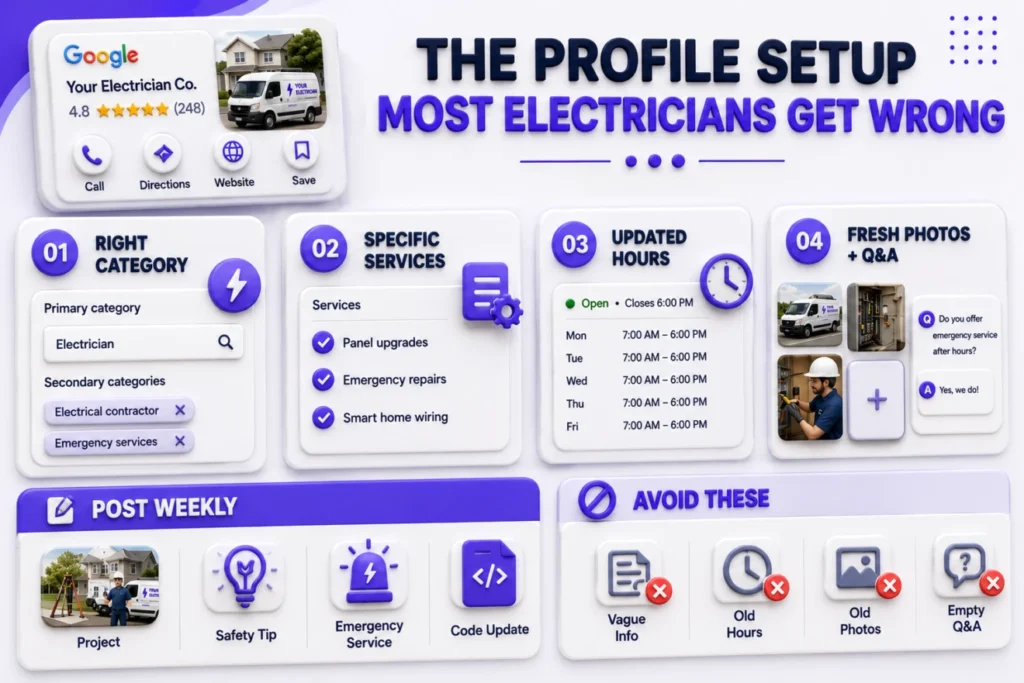
Google matches a business’s primary category against what searchers want, so “Electrician” should sit as the primary category, with secondary categories added only where they genuinely apply.
Vague service descriptions cause the next most common mistake. A listing that reads “electrical services” tells Google almost nothing useful.
A listing that lists “residential panel upgrades,” “emergency electrical repairs,” and “smart home wiring” gives the algorithm specific terms to match against specific searches.
Business hours matter more than most electricians assume. Whitespark’s 2026 report added a new factor this year: whether a business shows as open at the exact moment someone searches.
That factor already ranks among the top five local pack signals measured.
An electrician who lists inaccurate hours, or forgets to update seasonal hours, risks losing visibility during the exact window a customer is searching.
| Mistake | Why It Hurts | The Fix |
| Vague category or service list | Google can’t match specific searches | List detailed, specific services |
| Inaccurate or outdated hours | Profile may show as closed during a search | Update hours immediately, including holidays |
| No photos or stale photos | Signals an inactive, less trusted business | Add project photos weekly |
| Unanswered Q&A section | Missed keyword and trust opportunity | Seed and answer common questions |
A Posting Cadence That Actually Signals Activity
Regular posting tells Google a business stays active and worth showing to searchers.
A weekly cadence works well for most electrical contractors without pulling attention away from actual electrical work.
A simple rotation covers most of what matters:
- A recently completed project, shared with the customer’s permission
- A short seasonal safety tip, such as holiday lighting or storm prep
- A reminder about emergency availability during peak season
- A quick note on a code update or inspection requirement
None of this needs to look polished. A phone photo with two sentences of context does the job. Consistency matters more than production value.
Photos and Q&A: Overlooked Trust and Conversion Assets
Photos do double duty on a Google Business Profile. They build trust with whoever reads the listing, and they give Google fresh content to associate with the business.
Before-and-after project shots perform especially well for electrical work, since they show a result a homeowner can understand at a glance. Team photos and vehicle photos add a human layer that stock imagery can’t match.
Most electrical contractors ignore the Q&A section, which is a mistake. Anyone can post a question there, including competitors, and an empty section looks neglected.
Seeding it with genuine, commonly asked questions, like “Do you offer emergency service after hours?” or “Are you licensed and insured?”, and answering them directly gives Google more content to match against long-tail searches.
It also answers the exact question a nervous customer wants resolved before they call.
Building Local Service Pages That Convert
Generic “Services” pages rarely rank, and they rarely convert. A page built specifically around “GFCI outlet won’t reset” beats a generic “Electrical Services” page nearly every time, because it matches how people actually search.
Whitespark’s 2026 report ranks a dedicated page for each service as the single highest-weighted factor for local organic rankings, ahead of every other signal measured.
Emergency Searches and Planned Projects Need Different Pages
Not every electrical search comes from a customer at the same stage of the decision process. Someone searching for an emergency electrician because half the house has lost power behaves very differently from someone researching an EV charger installation or electrical panel upgrade for next month.
Emergency searches are built around speed and availability. Those pages should make business hours, service area, licensing, emergency availability, reviews, and a click-to-call option immediately visible. A customer with an urgent electrical problem should not have to scroll through several paragraphs before finding out whether someone can help.
Planned projects need more detail. A homeowner researching a panel upgrade, generator installation, rewiring project, or EV charger is more likely to compare companies before requesting an estimate. These pages benefit from project photos, information about permits and inspections, pricing guidance where appropriate, licensing and insurance details, FAQs, and a clear estimate request.
| Search Type | What the Customer Needs Most | Page Priority |
| Emergency repair | Speed, availability, trust, phone number | Click-to-call, hours, service area, reviews |
| Electrical repair | Clear diagnosis and next step | Problem explanation, service details, CTA |
| Panel upgrade | Cost, safety, process, credentials | Pricing guidance, permits, photos, FAQs |
| EV charger installation | Compatibility, installation process, estimate | Service details, project examples, estimate CTA |
| Rewiring or major project | Proof, experience, planning information | Credentials, project photos, detailed service content |
This distinction helps each page match the actual reason behind the search instead of treating every electrical customer as if they were looking for the same thing.
The Page Structure Formula for Service and Location Pages
A well-built service page follows a consistent structure, regardless of which job it targets.
- Open with the customer’s actual problem, stated in plain language, not trade jargon
- Explain the solution and what the visit typically involves
- Include pricing information where local regulations allow, even as a range
- Close with a clear call to action and a visible phone number
- Link to two or three related services
Consider an illustrative example:
An electrician builds separate pages for GFCI outlet installation, electrical panel upgrades, and ceiling fan installation, instead of one generic services page.
The GFCI page opens with “bathroom outlet won’t reset” instead of “GFCI installation services,” since that phrase sits closer to what a frustrated homeowner actually types into Google. The panel upgrade page does the same with “circuit breaker keeps tripping.”
Each page targets a distinct problem, which keeps pages from competing against each other for the same search.
Schema Markup: Telling Google Exactly What You Do
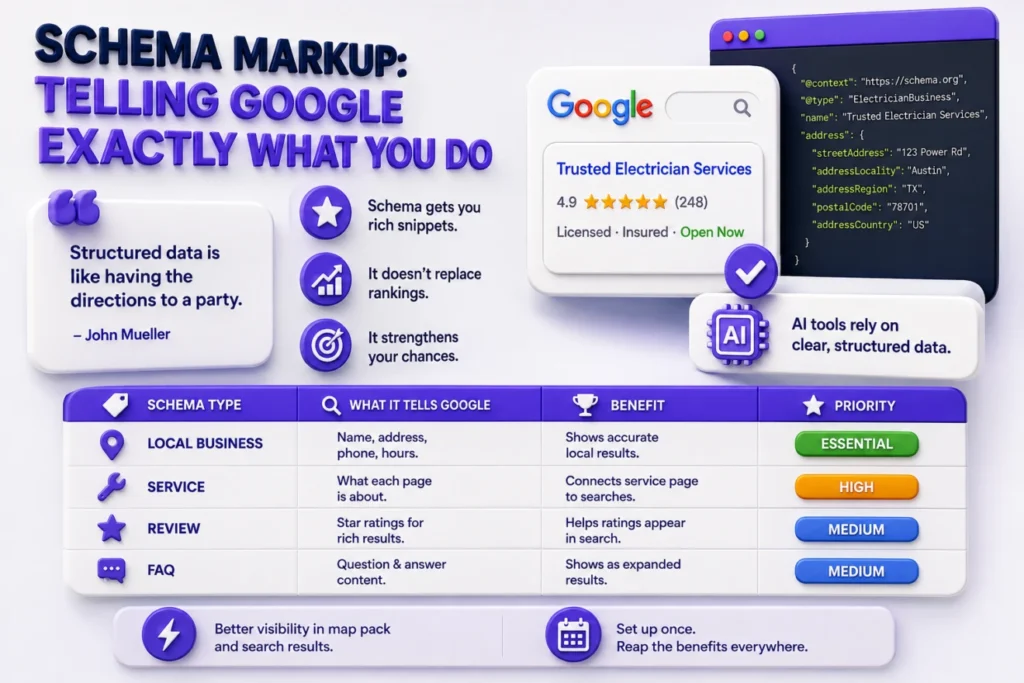
Schema markup adds structured code to a webpage that tells search engines exactly what a business does, without forcing them to guess. For an electrician, it turns a page full of readable text into something a machine can parse with precision.
According to John Mueller, Search Advocate on Google’s Search Relations team, structured data has never been the shortcut some site owners hope it is.
When the topic came up in a public exchange about whether adding more schema could improve a site’s ranking, Mueller explained the relationship this way:
“Structured data is like having the directions to a party. Ranking factors are like the invite to that party.”
His point was that marked-up content can make a business eligible for enhanced search features, like rich snippets or AI citations, but it doesn’t replace the underlying signals search engines actually use to decide who ranks.
For an electrician’s site, that means schema markup earns the invitation to extra visibility; it doesn’t substitute for the ranking work covered elsewhere in this guide.
Local Business schema covers the basics: business name, address, phone number, hours, and service area. Service schema goes further and marks up individual services with descriptions, so Google can connect a specific page to a specific job.
Review schema lets star ratings appear directly in search results. FAQ schema marks up question-and-answer content so it can surface as an expanded result.
Schema alone won’t move a map pack ranking dramatically. Current research places it lower on that specific list than most electricians assume. Its real value shows up elsewhere: it strengthens organic rankings and plays an outsized role in whether AI tools cite a business when generating an answer.
Because AI search leans heavily on structured, unambiguous data, an electrician who skips schema hands that entire channel to competitors who don’t.
| Schema Type | What It Tells Google | Priority for an Electrician Site |
| Local Business | Name, address, phone, hours, service area | Essential |
| Service | What each page’s specific job covers | High |
| Review | Star ratings for rich results | Medium |
| FAQ | Question and answer content | Medium |
City and Neighborhood Pages Without Duplicate Content Risk
Electricians serving more than one city run into a specific trap. Building a page for each service area, then swapping out only the city name, creates near-duplicate content that search engines can penalize rather than reward.
A genuinely unique location page references details specific to that area: local permit requirements, common wiring issues tied to older housing stock in that neighborhood, or climate factors that affect electrical systems differently across service areas.
A page for a coastal town might address storm-related outages. A page for a city with older housing stock might cover knob-and-tube wiring replacement.
The goal stays simple: a page that could only describe that specific area, not a template with the city name swapped out.
Trust Signals: Licensing, Insurance, and Reviews
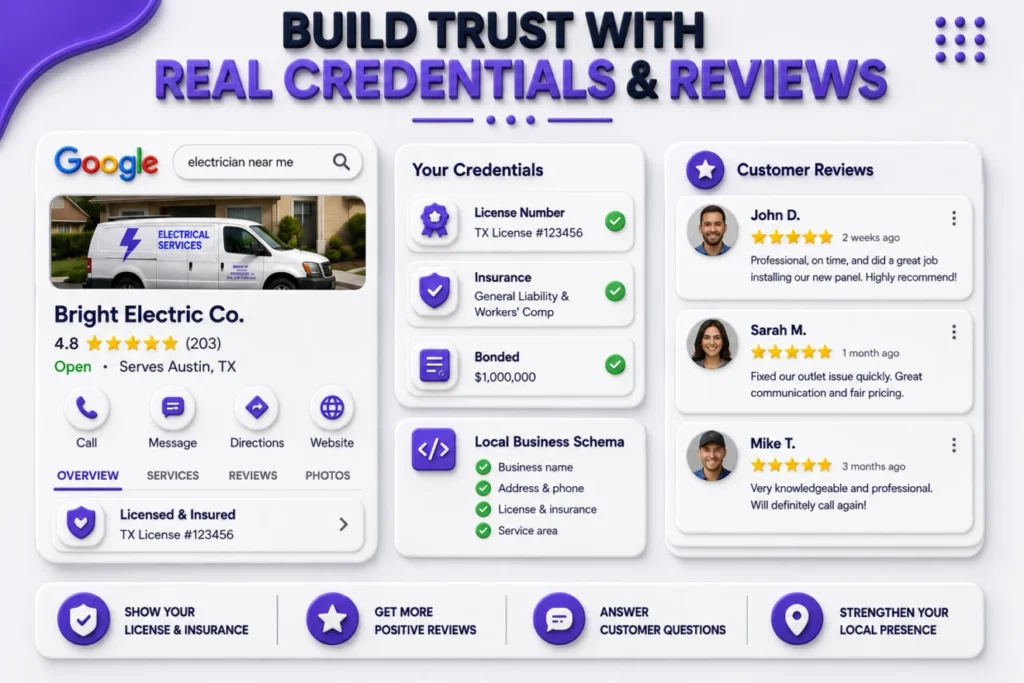
Electrical work carries a level of risk that makes trust especially important. Before calling an electrician, homeowners often want reassurance that the company is legitimate, qualified, insured, and experienced enough to work safely inside their home.
Licensing and insurance information should therefore be treated primarily as verification and conversion signals, not as a guaranteed Google ranking shortcut.
Make Licensing and Insurance Easy to Verify
If licensing is required in the markets an electrician serves, the relevant license information should be easy for potential customers to find. The same principle applies to insurance, bonding, certifications, and other credentials that genuinely apply to the business.
Important trust information can appear naturally on the homepage, About page, relevant service pages, and other areas where a customer is deciding whether to make contact.
Structured data can also reinforce business information where an appropriate property is available, but anything marked up should accurately match information customers can see on the page.
The SEO benefit here is indirect but still important. Clear credentials make the business easier to understand and verify, while also reducing uncertainty for a customer choosing between several electricians.
Instead of making a generic statement such as “licensed professionals you can trust,” give people useful information they can actually verify where appropriate.
A Review Funnel That Stays Compliant
Review volume, quality, and recency can influence both customer decisions and local visibility. The safest approach is also one of the simplest: ask genuine customers for honest feedback after completing the work.
The best time to make the request is usually shortly after the job finishes, while the customer’s experience is still fresh. A short text message or email containing a direct Google review link removes unnecessary friction without influencing what the customer is expected to say.
There is an important distinction between asking for a review and incentivizing one.
Google prohibits businesses from offering payments, discounts, free products, services, or other incentives in exchange for posting, changing, or removing a review. Businesses should therefore avoid offering a gift card, discount, or other reward for a Google review.
Federal rules are slightly different. The FTC’s Consumer Reviews and Testimonials Rule prohibits compensation or incentives when they are conditioned, explicitly or implicitly, on the review expressing a particular positive or negative sentiment.
Review gating creates another problem. Asking only satisfied customers to post publicly while directing dissatisfied customers into a private feedback process can distort the review profile and create unnecessary policy risk.
The most defensible process is straightforward: ask real customers for honest reviews, make the process easy, and accept the feedback whether it is positive or negative.
| Review Tactic | Recommendation |
| Ask every genuine customer for honest feedback | Recommended |
| Send a direct Google review link after service | Recommended |
| Respond professionally to positive and negative reviews | Recommended |
| Offer a discount or gift for a Google review | Avoid; prohibited by Google |
| Reward customers only for positive reviews | Avoid; FTC and platform compliance risk |
| Ask only satisfied customers to post publicly | Avoid |
Responding to Reviews Without Sounding Robotic
A review response says as much about a business as the review itself. Positive reviews deserve a genuine thank you that references something specific from the job, not a copy-pasted line repeated under every review.
Negative reviews deserve a calm acknowledgment of the concern, a brief explanation of the resolution, and an invitation to continue the conversation directly rather than in public comments.
Responding within a day or two, rather than weeks later, shows an active, attentive business. Skipping negative reviews entirely leaves a worse impression than a mediocre rating handled well.
Technical SEO and Local Citations That Support Everything Else
None of the above matters much if a site takes several seconds to load on a phone. Most electrical searches happen on a mobile device, often from someone standing in front of a tripped breaker, and a slow, clunky site loses that visitor before they ever reach a phone number.
Core Web Vitals and Mobile Speed for Electrician Sites
Google measures page experience through a set of metrics known as Core Web Vitals, and three of them matter most for a service business website.
Largest Contentful Paint measures how quickly the main content of a page loads, and it commonly fails on electrician sites because of oversized, unoptimized project photos.
Cumulative Layout Shift measures whether elements jump around while a page loads, often caused by image galleries or testimonial sliders without reserved space.
Interaction to Next Paint measures how quickly a page responds once someone taps something, which tends to suffer on sites overloaded with plugins or heavy contact forms.
None of these require a full rebuild to fix. Compressing images, giving every image a fixed size in the code, and removing unnecessary plugins solve most of the problem on an existing site.
| Core Web Vital | Target | Common Cause on Electrician Sites |
| Largest Contentful Paint | Under 2.5 seconds | Oversized project photos |
| Cumulative Layout Shift | Under 0.1 | Image galleries, testimonial sliders without fixed dimensions |
| Interaction to Next Paint | Under 200 milliseconds | Heavy contact forms, excess plugins |
NAP Consistency and Citation Building
NAP, meaning name, address, and phone number, needs to match exactly across every directory, review site, and citation source a business appears on.
A mismatch as small as “St.” versus “Street” can confuse the systems trying to confirm a business stays legitimate and consistently located. Citations carry less influence on map pack rankings than they did several years ago, but they haven’t disappeared, and their role keeps shifting.
Trade-specific directories, industry association listings, and licensing board databases carry more weight than generic, low-quality directory submissions.
A handful of accurate, relevant citations serve an electrician better than dozens of thin ones scattered across directories nobody checks.
Local Backlink Opportunities Beyond the Chamber of Commerce
Chamber of Commerce membership works as a starting point, but it’s also the first idea every business tries, which limits how much it can set one electrician apart from another.
Stronger local link and referral opportunities tend to sit closer to the actual customer journey:
- Real estate agents who need pre-listing inspections handled quickly
- Home inspectors who regularly spot electrical issues
- General contractors managing renovation projects
- Insurance adjusters who need licensed electricians for claim-related repairs
These relationships tend to produce genuine referrals and backlinks, because they rest on an actual working relationship rather than a listing fee.
Winning in AI Search: Where Local SEO Meets AEO
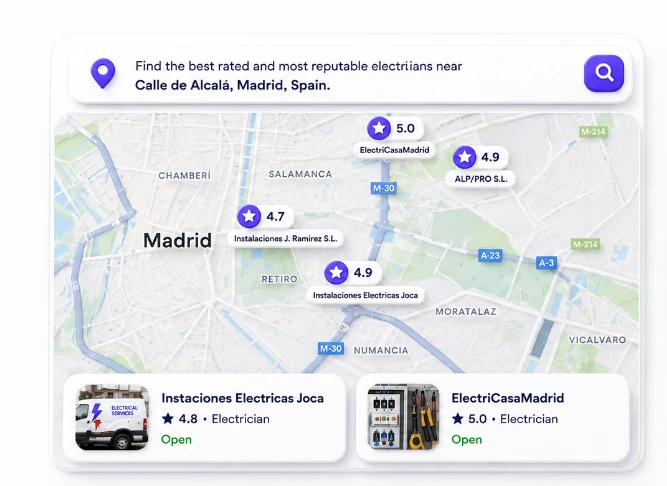
Homeowners increasingly ask ChatGPT or Google’s AI Overviews “who’s a good emergency electrician near me” instead of typing the same question into a search bar. This shift happened fast.
BrightLocal’s 2026 survey found that AI tools now account for 45 percent of local business discovery, making AI the third most common way people find a local business, behind only Google and Facebook.
That growth blurs the line between traditional SEO and answer engine optimization fast, and understanding the difference between SEO and AEO in 2026 is quickly becoming as important as understanding local pack rankings themselves.
According to Danny Sullivan, a Director within Google Search who spent years as the company’s public Search Liaison, business owners worrying about a separate strategy for every flavor of AI search are overthinking the problem.
Speaking at WordCamp US in August 2025, Sullivan addressed the growing alphabet soup of acronyms, AEO, GEO, AIO, that agencies use to sell AI-visibility services, and waved most of the distinction aside:
“Good SEO is good GEO, or AEO, AIO, LLM SEO, or LMNOPO. So, they’re all fine.”
His underlying point was straightforward: content built on real expertise and genuine usefulness tends to perform across every one of these channels at once.
This is exactly why this guide treats AI search as an extension of solid local SEO rather than a parallel discipline requiring its own content strategy.
How AI Overviews and ChatGPT Pick Which Electrician to Recommend
AI tools don’t run a separate, secret ranking system. They draw from largely the same signals traditional local SEO already optimizes for: consistent business information across the web, genuine customer reviews, and content that answers real questions clearly.
An AI tool generating a recommendation needs to trust the information it pulls from. That means a business’s name, address, phone number, and service details need to match across its website, Google Business Profile, and any directory an AI system might reference.
This is why understanding how to optimize a website for ChatGPT and Perplexity is becoming an important part of building AI search visibility.
Reviews still carry significant weight, since AI tools frequently summarize sentiment across a business’s full review profile rather than pulling from a single source.
Clear, direct FAQ content, answering exactly what a customer would ask, gives these tools clean material to draw from when building an answer.
The practical takeaway matters more than the underlying technology. An electrician who already runs a complete, accurate, well-reviewed online presence for traditional local SEO doesn’t need a separate AI strategy.

Voice Search and Featured Snippets: Writing for the Question, Not the Keyword
Voice search and featured snippets reward the same kind of content: direct answers to specific, conversational questions.
Someone asking a smart speaker “how much does an electrical panel upgrade cost” wants a spoken answer pulled from a page that actually answers that question in plain language, not a page stuffed with the keyword “panel upgrade cost” repeated for search engines.
Writing for the question means leading with the answer, then explaining the detail afterward. A page targeting “why does my breaker keep tripping” should state the most common cause in the first sentence or two, then expand from there.
This structure serves three purposes at once: it satisfies a reader skimming on a phone, it gives Google clean material for a featured snippet, and it matches how voice assistants read results aloud.
Question-based headers outperform keyword-stuffed ones. A heading that reads “How Much Does an Electrical Panel Upgrade Cost” performs better across search, voice, and AI answers than one that reads “Panel Upgrade Pricing,” even though both target the same underlying search.
This same principle carries through everything on the page, not just headers. For the full approach, see how to write content that AI overviews will cite.
That covers the fundamentals. For the complete playbook, see how to do AEO for a local business.
A 90-Day Local SEO Plan for Electricians
Trying to fix every part of local SEO at once usually creates more work than progress. A better approach is to tackle the highest-impact problems first, then build on that foundation over the next three months.
| Period | Primary Focus | What to Work On |
| Days 1–30 | Fix the foundation | Audit the Google Business Profile, correct NAP information, verify hours and services, improve mobile speed, set up conversion tracking, and establish a compliant review-request process |
| Days 31–60 | Build high-intent pages | Improve the highest-value service pages, strengthen calls to action, add useful service details, review structured data, and publish missing pages for important electrical services |
| Days 61–90 | Expand local authority | Build genuinely useful location pages, publish supporting content, earn relevant local links, add project proof, and begin monitoring visibility across traditional and AI-assisted search |
A one-truck electrician may spend most of those first 90 days improving the Business Profile, reviews, and a handful of high-value service pages. A larger company serving several cities may need to spend more time on location architecture, duplicate-content prevention, tracking, and local authority.
How to Know Your Local SEO Is Actually Working
Most electricians never actually track whether any of this effort is working. Someone says the website ranks better this month than last month, and that’s supposed to be good news.
But a ranking alone doesn’t tell an electrician whether any of it turned into real work.
The good news is that watching the right numbers doesn’t require hiring a data analyst.
A handful of free tools, used correctly, answer almost every question that matters.
Google Business Profile Insights: The First Place to Look
Google Business Profile already tracks activity on its own, for free, with nothing to set up.
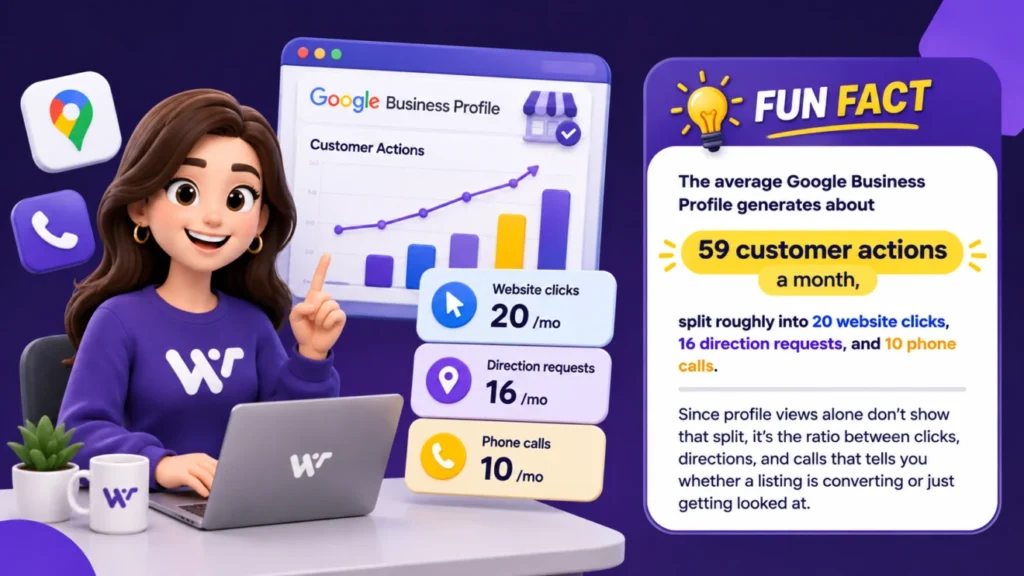
Inside the profile dashboard, an electrician can see how many people viewed the listing, whether they found it by searching for the business name directly or by searching for something like “electrician near me,” and how many tapped the call button or asked for directions.
This is the simplest starting point. If profile views keep climbing but calls don’t, that’s a sign the listing looks fine but isn’t convincing anyone to actually pick up the phone.
Google Search Console: What’s Actually Bringing People to the Site
Google Search Console is a free tool from Google that shows exactly which searches bring visitors to a website.
It covers different ground than Google Business Profile. GBP tracks the map listing. Search Console tracks the website itself: which pages show up in search results, which exact words and phrases people typed to find them, and whether Google has run into any technical problems reading the site.
In June 2026, Google also introduced dedicated Generative AI performance reporting in Search Console. Where the report is available, site owners can see impressions and pages appearing within Google’s generative AI search experiences, including AI Overviews and AI Mode. Google is initially rolling the feature out to a subset of websites, so not every Search Console property will have access yet.
An electrician might discover their panel upgrade page is showing up for searches like “circuit breaker keeps tripping,” even though that exact phrase never appears anywhere on the page.
That kind of detail is genuinely useful for deciding what to write about next.
Google Analytics 4: Connecting Website Visits to Actual Leads
A traffic number by itself doesn’t mean much. A hundred people visiting a website is worth nothing if none of them ever call.
Google Analytics 4, usually just called GA4, tracks what visitors actually do once they land on a site. Set up correctly, it can count every time someone clicks the phone number, fills out a contact form, or requests a quote.
That turns a vague number like “1,200 visitors last month” into something an electrician can actually use: “1,200 visitors, and 34 of them tried to contact us.” That second number is the one that matters.
Call Tracking: Knowing Exactly Which Channel Made the Phone Ring
Here’s a common situation. An electrician runs local SEO, runs a few Facebook ads, and gets listed in a couple of directories. Then the phone rings. Which one of those actually caused it?
Without tracking, there’s no way to know for sure. Call tracking solves this through something called dynamic number insertion, or DNI. It sounds technical, but the idea is simple: the website shows a different phone number depending on where the visitor came from.
Someone arriving from a Google search sees one number. Someone arriving from a Facebook ad sees a different one. Every call gets logged and labeled by source automatically.
This is the difference between guessing which marketing effort works and actually knowing. An electrician spending money across more than one channel at a time needs this more than almost anything else on this list.
| Tool | What It Shows | Cost | Best For |
| Google Business Profile Insights | Profile views, searches, calls from the listing | Free | A quick, no-setup starting point |
| Google Search Console | Which searches bring visitors to the site | Free | Deciding what content to write next |
| Google Analytics 4 | What visitors do after they land on the site | Free | Turning traffic into real conversion numbers |
| Call tracking (DNI) | Which marketing channel generated each call | Paid, low monthly cost | Businesses running SEO alongside ads or directories |
None of this requires trusting anyone else’s numbers. A rank tracker showing a business moved from position 7 to position 3 sounds encouraging, but it doesn’t confirm a single phone call came from it.
Owned data, calls logged, forms submitted, jobs booked, is the only number that actually confirms whether local SEO is working. It’s also the one number no agency can quietly inflate.
Frequently Asked Questions
Is local SEO for electricians different from general SEO?
Local SEO for electricians is different from general SEO, as it centers on geographic intent and urgency rather than broad informational searches. And so, Google Business Profile and location-specific content carry far more weight than they would for a non-local business.
Do I need a storefront to rank locally if I work out of a van?
No, set up the Google Business Profile as a service-area business, define the coverage area clearly, and build location-relevant content and reviews from there.
How many city or service-area pages should I create?
Create pages for every area genuinely served, each with unique local content. Thin, near-duplicate city pages with only the name swapped can hurt more than they help.
Can electricians do local SEO themselves, or should they hire an agency?
Yes, electricians can do local SEO themselves, especially if they have a small service area and are willing to spend time learning the basics.
Is local SEO worth it for a one-truck electrician?
Usually local SEO is worth it for a one-truck electrician, starting with Google Business Profile and reviews specifically, since those levers deliver results fastest at the lowest cost before investing in a full content strategy.
Local SEO vs. Google Local Services Ads: which should come first?
They work well together rather than against each other. Local Services Ads buy visibility immediately, while local SEO builds a durable asset over time. Many electricians run both, with SEO gradually reducing dependence on paid clicks.
How long until local SEO actually produces calls?
Google Business Profile improvements can show movement within 30 to 60 days. Content and citation work typically takes 60 to 180 days to fully mature.
How much does local SEO for an electrician cost?
For an electrician, local SEO typically costs around $500–$3,000+ per month, depending on the market, competition, and how much work is included.
How do AI tools like ChatGPT decide which electrician to recommend?
Largely the same signals as traditional local SEO: consistent business information, genuine reviews, and clear, direct answers to common customer questions.
Can I put “24/7 emergency” in my Google Business Profile name?
Unless “24/7 emergency” is genuinely part of the business’s real-world name, don’t add it to the Business Profile name. Google requires businesses to use their real-world name and warns that unnecessary information in the name can lead to profile suspension.
If you offer emergency service, communicate that through your services, description, and appropriate business hours instead.
Ready to Turn Local Searches Into Booked Electrical Jobs?
If you want to stop losing emergency calls to the three businesses sitting above you in the map pack and start showing up at the moment someone nearby needs a licensed electrician today, then a claimed listing is not enough on its own.
Webtec builds local search strategies for trade businesses: Google Business Profile optimization, service and location pages built around the problems customers actually search for, technical fixes that make a site fast and usable on a phone, and the consistency AI tools need before they will recommend a business at all.
We audit the website and the Google Business Profile before any conversation starts. You see exactly which part of your local presence is costing you calls, not a sales pitch dressed up as advice.
Want to know exactly what’s keeping local customers from finding you first? Talk to our team and we’ll walk through what’s working, what’s not, and what to fix first.
The Bottom Line
Local SEO for electricians comes down to five things, in order of impact:
- A fully optimized Google Business Profile,
- Service and location pages built around real customer problems,
- Trust signals unique to a licensed trade,
- A technical foundation that loads fast on a phone,
- A presence consistent enough that AI tools can recommend it with confidence.
None of this needs to happen all at once, and none of it needs to be guessed at. Webtec audits a website and Google Business Profile before any conversation starts, so an electrician sees exactly what’s costing them calls, not a sales pitch dressed up as advice.
Explore Webtec’s SEO services to see what a complete local search strategy looks like for an electrical business ready to stop relying on word of mouth alone.